



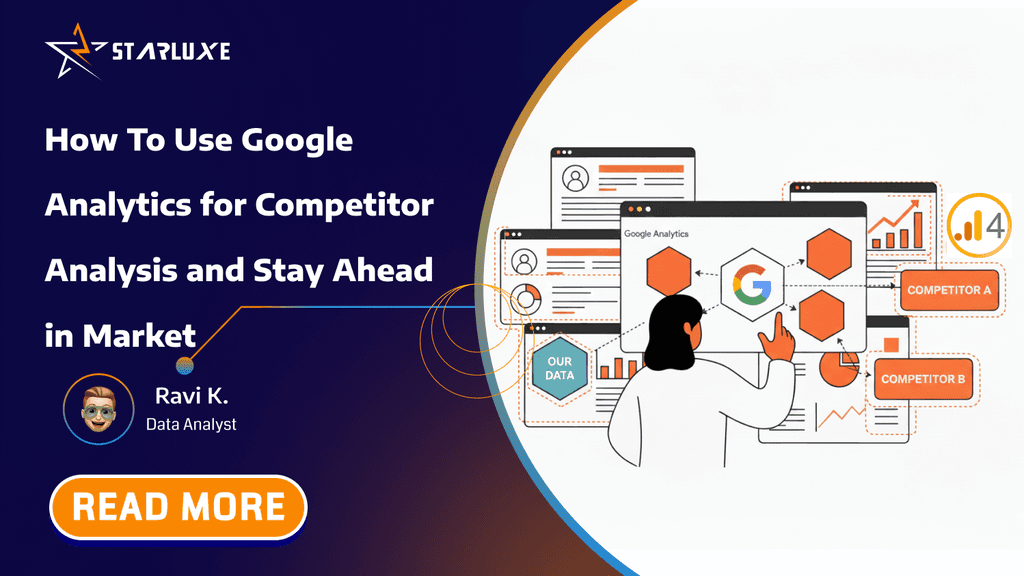
How To Use Google Analytics for Competitor Analysis and Stay Ahead in the Market
Introduction
In today’s competitive landscape, understanding your competitors is just as important as analyzing your own performance. Google Analytics (GA4) provides valuable insights that can help you benchmark against competitors, identify gaps, and uncover opportunities to improve your digital strategy.
By leveraging GA4’s advanced features and integrating competitor intelligence, businesses can make smarter, data-driven decisions to stay ahead in the market.
Why Competitor Analysis Matters
Competitor analysis gives you context. It reveals how your performance stacks up against others in your industry and highlights areas for growth. Without it, you’re optimizing in isolation, unaware of shifting trends or customer expectations.
- Benchmark performance – See where you stand in traffic, engagement, and conversions.
- Identify opportunities – Spot keywords, campaigns, or platforms competitors excel at.
- Prevent stagnation – Stay aligned with evolving customer needs and digital best practices.
Using Google Analytics for Competitor Insights
While GA4 doesn’t directly show competitor data, it provides benchmarks and can be combined with other tools for powerful competitive intelligence.
1. Industry Benchmarking Reports
GA4 includes Benchmarking Reports (available if enabled) that compare your traffic sources, engagement metrics, and device usage with aggregated industry data. These reports help you understand:
- Are you receiving more or less organic traffic than peers?
- Which channels outperform in your industry?
- How engagement time compares with competitors.
2. Traffic Acquisition Analysis
Review your Traffic Acquisition report to identify which channels drive the most users. Then, compare this with competitor campaigns by monitoring:
- Search engine visibility (using tools like SEMrush or Ahrefs).
- Referral links from industry blogs and directories.
- Social media engagement rates.
3. Audience Insights
GA4’s demographic and interest data can be compared with public competitor audience insights (from platforms like SimilarWeb or social media). This helps you see whether you’re reaching the same segments—or missing new ones.
4. Content Performance Evaluation
Analyze which blog posts, landing pages, or videos bring the most engagement. Compare your top content with competitors by checking:
- Which formats perform best (blogs, videos, case studies).
- Average engagement time on similar topics.
- Content gaps where competitors rank but you don’t.
5. Conversion Funnel Comparison
GA4 allows you to set up conversion funnels. By monitoring where users drop off, you can contrast your funnel performance with industry benchmarks to see if your checkout, signup, or lead form experience lags behind competitors.
Best Practices for Competitor Analysis with GA4
- Set clear KPIs – Decide if you want to benchmark traffic, conversions, or retention first.
- Combine GA4 with third-party tools – Use SEMrush, SimilarWeb, or Google Ads Auction Insights for richer comparisons.
- Regularly review trends – Market dynamics shift fast; competitor analysis should be ongoing.
- Act on findings – Don’t just collect data; optimize campaigns, content, and user experiences based on insights.
Turning Insights Into Strategy
Data without action is wasted. Once you identify how you compare to competitors, translate insights into strategies:
- Close performance gaps – If competitors dominate organic search, invest in SEO content.
- Leverage strengths – Double down on channels where you outperform.
- Experiment continuously – Test new offers, creatives, and engagement tactics to outpace competition.
Conclusion
Google Analytics is more than just a reporting tool—it’s a competitive advantage when used strategically. By benchmarking against competitors and translating insights into actionable steps, you can strengthen your market position and drive sustainable growth.
Staying ahead isn’t about copying competitors, but about learning from them and innovating faster. With GA4 competitor analysis, you’ll always know where you stand—and how to lead.


